Download the App
IMPACT STORIES
From Trust to Transformation: How KoloSquare is Reimagining the Future of Community Wealth for Africa’s Excluded Millions.
By the KoloSquare Communications Team. 
Impact Stories
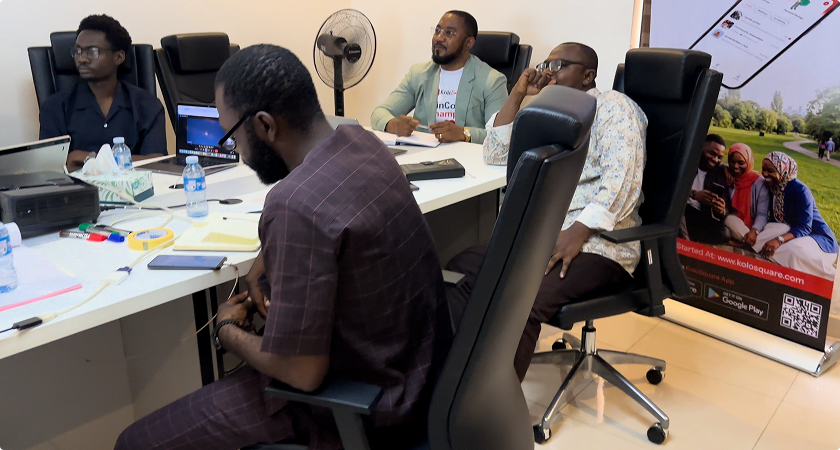
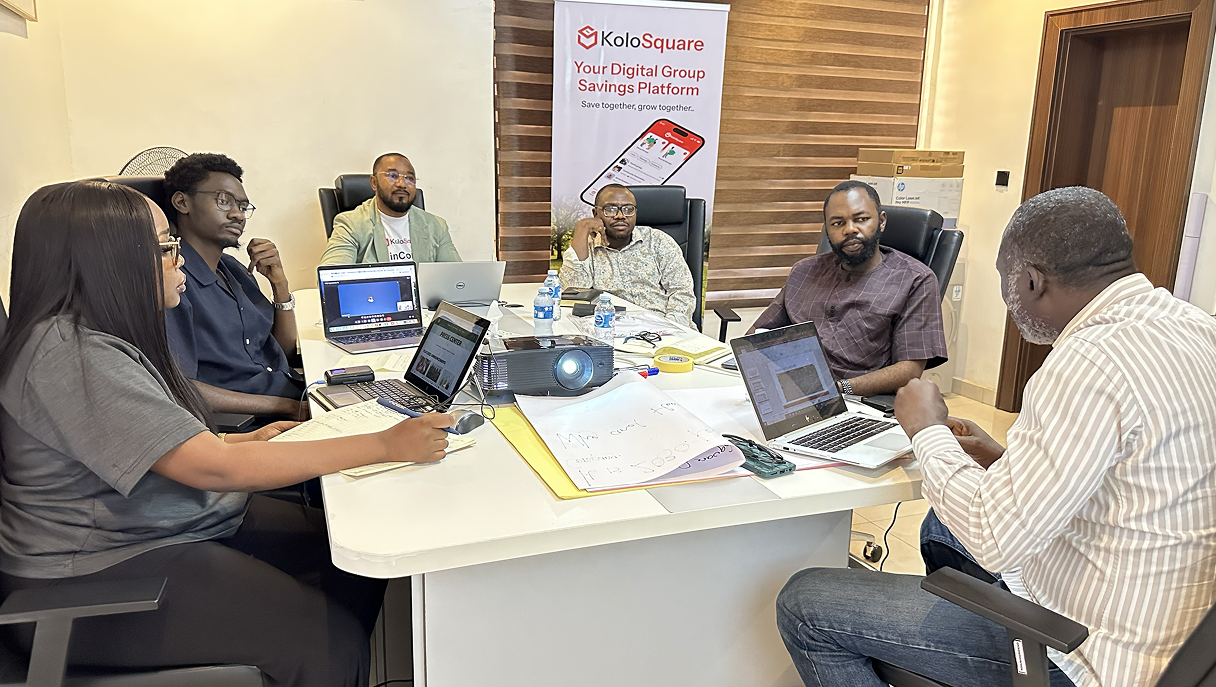
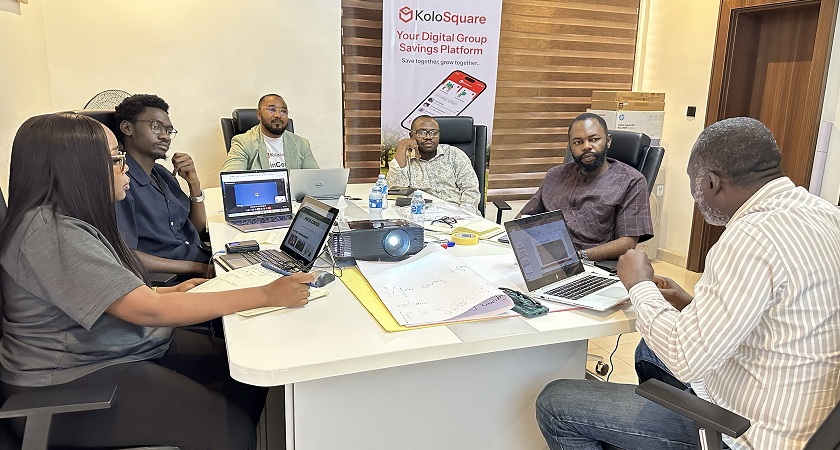
At a defining strategic workshop held by the KoloSquare leadership team, something quietly remarkable happened. A group of builders who had been working on a financial technology platform paused and asked themselves a harder question than any investor had ever asked them. Not “what does our product do?” but “what are we really here for?” The answer they arrived at has the potential to change the financial lives of millions.
There is a woman in Kano who has been organizing an Adashe group in her neighborhood for eleven years. Every month without fail, she collects contributions from fourteen women including traders, teachers, civil servants, and mothers who trust her with their savings because they have no better option. She records everything in a notebook, she keeps the cash in her wardrobe. She sends reminder messages on WhatsApp one by one, every single month and every year without fail, but she worries.
She worries about what happens if something goes wrong. She worries about what happens if a member disputes a contribution she did not record correctly. She worries about what happens to the group’s money if something happens to her. And she worries, most of all about how much further those fourteen women could go if someone could just give their trust a better home.
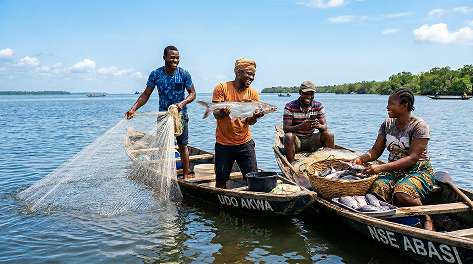
That woman is not alone. Across Nigeria in the markets of Lagos, the cooperatives of Kano, the community savings circles of Borno, the women’s associations of Kaduna, and the thrift groups of Abuja, hundreds of millions of people participate daily in some form of community savings. They save together as Ajo, as Esusu, as rotating clubs, as contribution groups, as cooperative societies. They save together because they understand something profound: that people achieve more when they cooperate with people they trust.
And yet for all their power, these systems have been left behind. No digital record. No governance structure, no security, no scale, no voice in the formal financial system that they have for generations quietly sustained from the outside.
KoloSquare was built to change that, and recently at a strategic workshop that brought KoloSquare’s leadership together for a session of deep deliberate thinking, KoloSquare articulated perhaps for the first time with full clarity “exactly why?”.
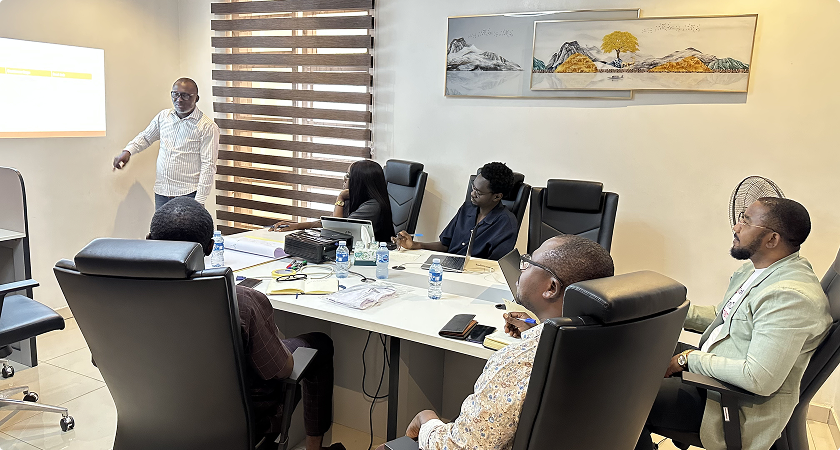
Asking the Question That Changes Everything
The workshop opened with a question that sounds simple but is anything but: “What business is KoloSquare really in?”
It is the kind of question that makes a room go quiet. Because the honest answer is not always the obvious one. Companies and institutions often define themselves by what they sell or do, by what technology they use, by what industry they operate in, and in doing so they often miss the deeper truth of what they actually exist to do.
The KoloSquare team was challenged to strip away the familiar vocabulary of the fintech world to stop using words like ‘app’, ‘platform’, ‘digital’, ‘savings’, ‘financial inclusion’, and to think about the business without those comfortable labels. Not because those words are wrong, but because they describe the solution, not the problem. And it is the problem, not the solution, that tells you who you truly serve and how large your opportunity really is.
Drawing on the strategic framework of ‘Thinking in New Boxes and the people behavior insights”, the team were meant to move from describing what KoloSquare currently delivers to understanding the progress that people as primary actors are genuinely struggling to achieve.
What emerged from that conversation was not a new product or a new feature. It was a new understanding and a new commitment.
“People do not onboard KoloSquare because they want software. They onboard KoloSquare because they want the benefits of traditional community savings without the risks of manual coordination, weak governance, and financial mistrust.”
The Real Business is Trust, Not Technology
The conclusion reached by KoloSquare team is one that sounds obvious in hindsight but represents a significant strategic shift in how the company understands itself and its purpose.
KoloSquare is not in the business of digitizing savings groups. KoloSquare is in the business of helping trusted communities coordinate, protect, and grow shared wealth through transparent, ethical, and digitally enabled cooperative finance.
This is a meaningful distinction. When you define your business by technology, you compete against other technology companies. You measure yourself by features, by user interfaces, by API speeds. But when you define your business by the human progress you enable, by the confidence, security, and collective opportunity that communities deserve, you are playing a fundamentally different and far more important game.
The workshop identified four layers of what customers are truly seeking when they turn to KoloSquare. At the surface, they want a better way to save together. Beneath that, they want their money managed safely and transparently. Deeper still, they want to belong to a responsible community that helps its members grow. And at the most fundamental level, the level that shapes everything else is that they want to achieve together what they cannot achieve alone.
That final insight of achieving together what cannot be achieved alone is one of the oldest truths of human civilization. It is why communities have always pooled resources. It is why the Ajo and the Esusu and the Adashe have survived every economic disruption for centuries. It is the reason people trust their neighbors with their savings even when they do not trust institutions.
KoloSquare’s role is not to replace that trust. It is to give that trust the infrastructure it has always deserved.
The People Who Need This Most
To understand the full weight of what KoloSquare is building, it is worth pausing on who it is building it for.
The face of informal community savings in Nigeria is not abstract. It is the market trader in Kano who contributes to three different Adashe groups simultaneously, one for household savings, one for her business inventory, one for her children’s school fees, and does all of it with handwritten records and mobile phone transfers to a group leader she trusts personally.
It is the civil servant in Abuja whose department cooperative has 200 members but operates on spreadsheets and goodwill. It is the women’s association in Borno whose members survived displacement and rebuilt their financial lives around a savings circle because nothing else was accessible to them
These are not edge cases. According to estimates, informal savings systems in Nigeria move hundreds of billions of naira annually, a figure that dwarfs the deposits of many formal financial institutions. Yet the people moving that money have no financial identity, no savings history, no credit profile, and no protection if something goes wrong.
The formal financial system has for decades treated these communities not as a market to serve but as a problem to solve, a population to be educated into using products designed for a different reality. KoloSquare’s insight is the opposite; these communities are not a problem, they are a strength. The practice of saving together, the culture of mutual accountability, the social capital embedded in every Ajo and every VSLA are not deficits, they are assets. What has been missing is not the right attitude, what has been missing is the right infrastructure.
KoloSquare’s strategic position: Traditional community finance enhanced by trusted infrastructure. Not replaced, Not disrupted, But Elevated
What the Workshop Revealed: A Company Bigger Than It Thought
One of the most striking moments of the workshop came when the team mapped the alternatives that KoloSquare’s users are currently working with. The list was not a catalogue of competing apps. It was a portrait of daily financial improvisation by people who deserve better.
Traditional Ajo and Esusu collectors. Village savings groups with handwritten ledgers. WhatsApp groups where contribution records are buried in chat threads. Rotating savings clubs that collapse when a key member travels or falls ill. Friends trusted to hold group funds. Cash kept at home. The ingenuity and resilience on display in each of these alternatives is extraordinary. But so is the vulnerability.
A single case of mistrust can dissolve years of cooperative financial behavior. A single bad actor can erase a group’s savings. A single argument about a contested record can fracture the social fabric that the group was built on. These are not hypothetical risks. They happen every day, in every Nigerian city and village, to real people who have no recourse and no safety net.
KoloSquare is building the recourse. It is building the safety net through digital records that cannot be altered without consensus, transparent governance structures with an all-inclusive multi-signatory approval, custodial banking partnerships that keep funds in regulated, NDIC-insured accounts, and ethical financing mechanisms aligned with both conventional and Islamic finance principles, KoloSquare is turning the informal into the protected, the invisible into the accountable, and the fragile into the resilient.
The workshop also revealed something else, the opportunity is far larger than savings alone. When communities have the infrastructure of trust, when they have verified records, digital identities, and cooperative financial histories, they become eligible for things that have always been out of reach. Ethical investment access, Health and emergency protection funds, Group business financing, Cooperative marketplaces, Agricultural value chain support, Diaspora remittances channeled directly into family savings groups, An AI financial coach that speaks in local languages such as Hausa, Yoruba, Igbo, and English.
The strategic vision that emerged from the workshop is of KoloSquare not as a savings app, but as Africa’s community wealth operating system, the trusted digital infrastructure through which communities organize economic activity, access opportunity, and build lasting prosperity together.
Why Does KoloSquare Exist? The Answer That Guides Everything
The workshop also clarifies the deepest layer of KoloSquare’s purpose, the “why” that sits beneath all the products, all the technology, and all the partnerships.
KoloSquare exists to help trusted groups transform relationships into shared opportunity and lasting prosperity.
That sentence carries enormous weight. It says that the starting point is not technology, it is relationships. It says that the destination is not savings, it is prosperity. And it says that the people KoloSquare serves are not passive recipients of financial inclusion, they are active participants in their own economic futures, who simply need a platform worthy of the trust they already carry
The “what” of KoloSquare will evolve. The products will grow, the features will expand, the geographies will multiply. But the why will not change. And it is the why that will determine whether the millions of people who need this most such as the market traders, the community associations, the women’s cooperatives, the farmer groups, the diaspora families, and the civil servant savings schemes will trust KoloSquare with the thing that matters most to them. Their money, their community, and their future.
“KoloSquare is not competing to become another financial application. It is competing to become the trusted operating system for community wealth, enabling millions of people to use the power of collective action to build financial resilience, economic opportunity, and lasting prosperity.”
A Commitment Renewed: What Comes Next
The workshop was not a planning session. It was a reckoning, the kind that only the most serious organizations allow themselves to have, because it requires honesty about how much more is possible if you are willing to think bigger about your purpose.
KoloSquare left the workshop with several clear commitments. To embed the new strategic definition of community wealth infrastructure, not savings app, into every aspect of how we communicate, builds, and grows. To place people and community’s real progress, not the product’s features, at the center of every decision. To build an ecosystem of partnerships with banks, insurance providers, ethical finance institutions, development organizations, and commerce partners that expands what communities can access through a single trusted relationship. And to make trust not just a value but a competitive strategy; the hardest thing to build, the easiest thing to lose, and the most powerful thing in community finance.
The woman in Kano with the notebook and the wardrobe full of other people’s savings will not see the workshop report, but she will feel its outcome because the measure of everything KoloSquare has committed to is whether her group, and groups like hers across Nigeria and Africa can one day operate with the confidence, security, and opportunity that their trust has always deserved.
That is what KoloSquare is building, not an app, not just a platform, but a future.
28 July, 2026